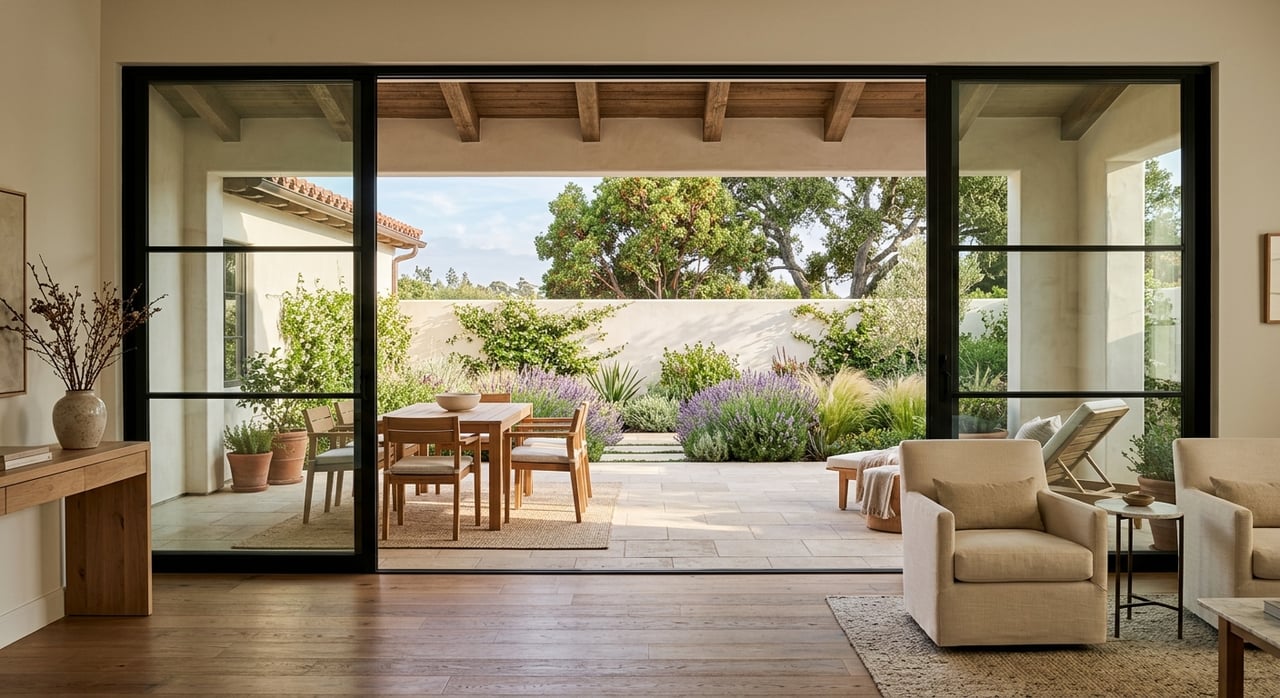
Relocating To Carmel Valley: Choosing Your Ideal Enclave
May 28, 2026
May 28, 2026
Relocating to Carmel Valley can feel simple at first glance, then surprisingly nuanced once you start comparing one pocket to the next. That is because Carmel Valley is not one uniform neighborhood. If you are trying to balance commute access, daily convenience, open space, and the overall feel of your next home, knowing how the area is laid out can save you time and sharpen your search. Let’s dive in.
Carmel Valley is a master-planned community along the Interstate 5 corridor with corporate offices, hotels, shopping, restaurants, neighborhood parks, a community recreation center, open-space areas, and an extensive trail system. The City of San Diego describes the community as home to about 39,000 people, with development concentrated on mesa tops while many valleys were left largely untouched.
That planning pattern matters when you relocate. Some parts of Carmel Valley feel more convenience-driven and mixed-use, while others feel more residential, lower density, or more connected to trails and open space. Your experience of Carmel Valley will depend a lot on which enclave you choose.
Before narrowing homes by price or style, it helps to define how you want your days to work. In Carmel Valley, the best-fit area often comes down to how much you value walkable errands, quick access to office corridors, a more suburban setting, or proximity to trails and preserved open space.
A simple way to begin is to ask yourself a few practical questions:
Once you know your priorities, the map starts to make more sense.
If convenience is high on your list, this is often the first area to explore. Del Mar Highlands Town Center brings together shopping, dining, health and fitness, services, movie times, Sky Deck, EV charging, parking structures, and quick-pickup stalls. One Paseo, located between Carmel Valley and Del Mar just north of SR-56 and close to I-5, combines shopping, dining, events, living, and working.
This is the most walkable and mixed-use part of Carmel Valley. Homes near this core may appeal to you if you want daily errands, casual dining, and entertainment to feel compact and accessible rather than spread out across a more purely residential setting.
For some buyers, that kind of convenience supports an easier relocation. If you are new to the area, being close to a strong retail and services cluster can make the first few months feel more manageable while you learn the broader San Diego landscape.
This enclave can be a strong match if you:
Another distinct part of Carmel Valley is the Employment Center and nearby corporate-office corridor. The Carmel Valley Employment Center precise plan describes this area as an industrial-office park with industrial, office, and minor commercial uses. It was designed to promote self-containment and a live-work environment, which helps explain why this pocket can feel more weekday-oriented than nearby residential areas.
For a relocating professional or executive couple, this area stands out for practical reasons. The Del Mar Heights Road and El Camino Real corridor is the part of Carmel Valley most closely tied to office uses, so many buyers focus here when they want to reduce local driving before reaching work or the freeway network.
This does not mean every home search here is about work. It simply means geography plays a bigger role. If your routine includes regular office time, the location of your home within Carmel Valley can have a noticeable effect on the rhythm of your week.
As you compare homes near the employment corridor, think about:
If you picture Carmel Valley as more suburban and less mixed-use, Neighborhood 10 is one of the clearest examples. This southeastern section of Carmel Valley includes single-family residential, low-density residential, a commercial center, and natural open-space corridors.
For buyers who want the least mixed-use feel, this type of pocket may be more appealing than the amenity core. The setting tends to read as more residential in character, with planning that supports lower-density living and separation from the busier mixed-use nodes.
This can be especially useful if you are relocating from another suburban community and want a more familiar transition. Rather than centering your home search around restaurants and shopping, you may prefer a pocket where residential patterns shape the experience more strongly.
Neighborhood 8 offers a different kind of appeal. The city describes it as a place where the Carmel Creek open-space corridor and CVREP help tie the neighborhood together, rather than one central shopping or service node. Its precise plan includes low-medium-density residential areas, trail access, and significant open-space preservation.
If you are drawn to green space and trails, this kind of enclave may stand out. The value here is not immediate retail concentration. Instead, it is the way open-space features influence the setting and how the neighborhood connects to outdoor areas.
For some relocating buyers, that can feel like a better lifestyle fit. If you want your home search to emphasize natural corridors and trail access over being close to a major shopping cluster, this is an important pocket to compare.
Neighborhood 8 may deserve a closer look if you:
Pacific Highlands Ranch is technically separate from Carmel Valley proper, but it comes up often in Carmel Valley searches for good reason. It borders the Carmel Valley core and was planned as a larger master-planned area with up to 5,470 residential units, a mixed-use community core, 400,000 square feet of commercial and office uses, multi-family housing, schools, and parks.
If you are comparing enclaves and also want to consider newer master-planned development nearby, Pacific Highlands Ranch is a logical addition to your search. Many buyers look at both areas side by side when weighing newer construction, planned amenities, and overall community layout.
It is not a substitute for Carmel Valley. It is simply a useful comparison point. In relocation planning, that broader view often helps you make a more confident choice.
Carmel Valley’s commute pattern is largely freeway- and arterial-based. The community sits along the I-5 corridor, and key areas connect through routes such as Del Mar Heights Road, El Camino Real, and SR-56.
In practical terms, homes closer to the major access roads and freeway network often involve less local-street driving before you begin the main part of your commute. That can matter if you expect frequent travel to office locations, coastal communities, or other parts of North County and San Diego.
When relocating, it helps to think beyond raw distance on a map. Two homes may both be in Carmel Valley, but the one with easier access to your main routes may fit your routine much better.
One reason Carmel Valley remains popular for relocation is that it combines residential areas with a strong public-amenity base. The community includes the Carmel Valley Library, Carmel Valley Recreation Center, multiple parks, a skate park, and local public safety facilities.
For everyday needs, the strongest cluster of retail and services is still the Del Mar Highlands and One Paseo area. That is the part of Carmel Valley most associated with walk-to-errand potential, dinner-out convenience, and a more centralized mix of uses.
If you are moving from out of area, those practical details matter. A neighborhood is not just about the home itself. It is also about how easy the surrounding area feels once daily life begins.
If school planning is part of your move, Carmel Valley requires extra care. The community spans more than one public school district, including Del Mar Union School District, San Dieguito Union School District, and Solana Beach School District.
The key point is that school fit is address-specific. Del Mar Union notes that its school locator is a street-level reference for the school of residence and any option area, and it advises families to contact the district with address questions. San Dieguito Union High School District also states that attendance-boundary confirmation should be made directly with the school.
That means you should verify boundaries before narrowing your search around any one home. In Carmel Valley, assumptions based on a broad neighborhood name are not enough.
A smart relocation search usually starts with lifestyle, then gets more specific. Carmel Valley gives you several distinct patterns to compare, and each one offers a different balance of convenience, access, and setting.
Here is a simple way to frame your decision:
The best enclave is not the one with the most buzz. It is the one that supports the way you actually want to live.
When you are moving to Carmel Valley, broad impressions are only the starting point. What really helps is understanding the small differences between pockets, how they connect to your routine, and which locations align with your goals.
That is where local guidance becomes valuable. A well-planned search can help you compare home options, commute patterns, school-boundary verification, and neighborhood feel without wasting time on areas that do not fit.
If you are planning a move to Carmel Valley or comparing it with nearby North County Coastal communities, Danielle Short & Associates can help you narrow the options with experienced, hands-on guidance tailored to your lifestyle and priorities.
Stay up to date on the latest real estate trends.

How Landscaping Can Enhance Curb Appeal and Long-Term Value.
Simple Ways to Make Your Home Feel Bigger Before Selling in Rancho Santa Fe.
Located in the prestigious village of Rancho Santa Fe, Danielle is a Luxury Estate Specialist, trained in marketing and selling high-end luxury homes. The firm will offer the personal and professional attention you require, all the while maintaining and respecting your privacy and treating your transaction with the utmost integrity.